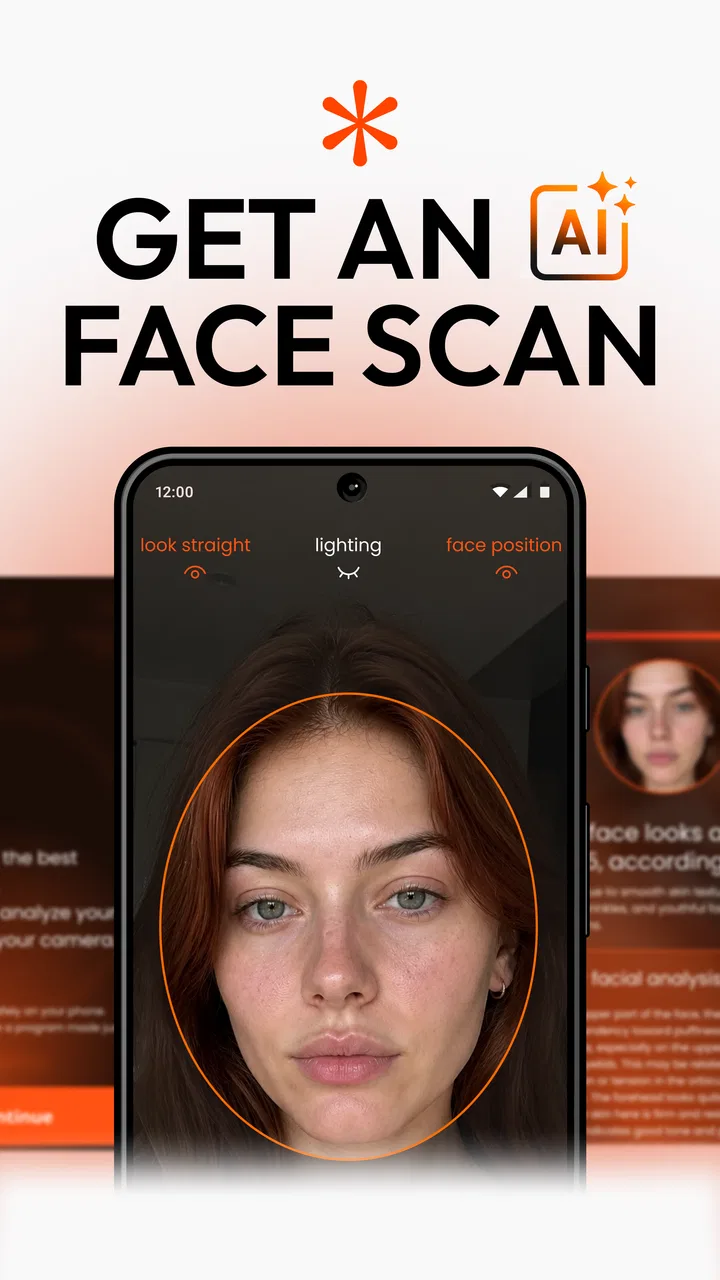
Liftique: Face Yoga & Workout
- 4.1
- Rating
- 100.00K
- Installs
- Free
- Price

 Analysis by App-foxy
I tried Liftique: Face Fitness as a beauty app built around an interesting question: can an artificial-intelligence estimate of your face age make a skincare and facial-exercise routine feel more personal? My impression is that it works best as a starting point for self-care rather than as a diagnostic tool. It gives the familiar “look at yourself differently” experience a more measurable feel, then connects that curiosity with the idea of lifting the skin naturally.
The app is free to install, which makes it easy to test without committing money first. It belongs to the Beauty category and comes from Algidi FZ-LLC. Its store summary focuses on seeing your face age with AI and supporting a natural lifting routine, while the short store description simply presents it as Liftique. That simplicity is useful: you can understand the basic purpose quickly, although the real question is how much practical value you receive after the initial novelty wears off.
What Liftique actually offers when you use it
The central appeal is the combination of facial analysis and routine-building. Instead of opening a general skincare article and trying to decide what applies to you, you begin with your own face as the reference point. That makes the experience more engaging than a collection of anonymous beauty tips. I found the concept especially appealing for people who like visual feedback and prefer a guided habit over browsing through unrelated advice.
You May Also Like

 Blood Strike: 2.5 Anniversary
Blood Strike’s Loadouts Turn Every Drop Into a Tactical Gamble
A close look at Blood Strike’s custom loadouts: how fast access to signature weapons reshapes its battle royale rhythm, rewards preparation, and narrows the gap between fights.

 Pandora - Music & Podcasts
Pandora’s Music Is Easy to Start, but Harder to Recover
Pandora’s strength is its low-effort path from a seed to a station. Its weak spot is how much confidence it asks you to place in connection, setup, and quiet recovery.

 8 Ball Pool
 Is Built on Rivalries, Rematches, and Routine
A close look at the rivalries, rematches, shared routines, and unanswered safety questions that turn a quick pool match into a persistent mobile community.

 Samsung Music
’s Quiet Strength Is Playing What You Already Own
Its reach comes less from spectacle than from dependable access to a personal library. That simplicity is both the app’s strongest retention engine and its ceiling.

 AccuWeather: Weather Radar
AccuWeather Review: A Quick, Clear Forecast for Everyday Decisions
For everyday plans, the best forecast is the one you can understand quickly. AccuWeather makes rain timing, radar, and local conditions easy to act on, with a few trade-offs.

 Hill Climb Racing
Why Hill Climb Racing Still Turns Crashes Into One More Run
A tiny car, a bumpy hill and one more upgrade: Hill Climb Racing keeps resurfacing because its simple chaos makes every near-miss feel personal.
More From Our News Desk



The AI face-age idea should be approached with the right expectations. A result like this is better treated as an estimate shaped by the photo, lighting, expression, camera angle and the app’s interpretation of visible features. It is not the same thing as a medical assessment, a professional skin consultation or a reliable measure of biological age. The useful part is the routine it may motivate, not the number as an objective truth.
That distinction changes how I would use the app. I would not take a single result as a verdict about my appearance, and I would avoid checking repeatedly in the same day. A more sensible workflow is to take a clear, relaxed photo in similar conditions, note how the app frames its feedback, and then focus on whether the suggested habits are easy enough to maintain. The comparison is meaningful only when the surrounding conditions are reasonably consistent.
For a beauty app, this is a more focused proposition than a standard selfie editor. It is not primarily about adding makeup, smoothing a portrait for social media or changing facial proportions in a picture. Those alternatives can produce an immediate visual effect, but they do not necessarily encourage a repeatable personal routine. Liftique’s value is more reflective: it tries to turn appearance-related curiosity into an ongoing wellness habit.
The free entry point and the paid question
Liftique is free to download, so the first decision is straightforward: install it, explore the opening experience and decide whether the approach feels useful before spending anything. That matters because the app’s appeal depends heavily on whether you enjoy its interpretation of facial fitness and AI feedback. A free starting point is more reasonable here than paying upfront for a concept you may find uncomfortable, repetitive or unconvincing.
There are in-app purchases priced from $9.99 to $29.99 per item. Those are the confirmed purchase points I would consider when judging value, but I would not assume that every part of the experience requires payment or that the most expensive item is automatically the best choice. The practical question is what the free experience lets you understand and whether a paid option adds enough guidance or continuity for your own routine.
Because the purchase range is broad, I would read each checkout screen carefully rather than treating the app as an all-or-nothing subscription decision. Check what the specific item unlocks, whether the payment is one-time or recurring, and whether the wording matches the kind of access you want. Those details matter more than the headline price. If you only want to experiment with the face-age concept, paying immediately would be difficult to justify. If the app becomes a regular part of your self-care schedule, a paid item may be easier to evaluate based on how consistently you use it.
I also appreciate that the free installation lowers the risk for hesitant users, but it does not remove the emotional risk. An app that comments on your face can affect your mood, especially if you are already worried about aging or appearance. Before purchasing, I would ask whether the experience leaves you feeling informed and motivated or simply more critical of yourself. No beauty tool is good value if it turns a small routine into daily anxiety.
Where the app can deliver real value
The strongest value is behavioral. Many people know they should take better care of their skin, relax facial tension or maintain a consistent routine, yet still struggle to start. A personalized-looking starting point can make the first step feel less abstract. Even if the AI estimate is only approximate, it may give you a reason to pay attention to habits that you would otherwise postpone.
I can imagine using it on a busy morning before work. Rather than spending time comparing products or scrolling through beauty videos, I could use the app as a short reminder to pause, follow a facial routine and move on with the day. That is a better use case than treating it as a mirror that needs constant checking. Its value comes from reducing decision fatigue, not from promising instant transformation.
Another useful approach is to pair the app with an existing routine rather than creating an entirely new one. For example, you might use it after washing your face in the evening, when you already have a few quiet minutes. The habit then has a natural anchor. If the app’s guidance is easy to follow, that connection can make it more sustainable than a routine scheduled at a random time.
There is also a useful self-observation angle. People often notice tension in the jaw, forehead or around the eyes only after a long day. A facial-fitness app can encourage you to become more aware of those patterns. That does not mean it can explain every cause or solve a skin concern, but it can help you notice when your routine is relaxing, when you are rushing and when you are using the app mainly for reassurance.
One non-obvious tip is to separate evaluation from emotion. Take the initial result, write down what you actually want to improve and then stop judging the result for a while. Focus on whether the routine is comfortable and manageable. Repeating the scan whenever you feel dissatisfied can create a loop in which the app becomes a source of checking rather than a tool for better habits.
A second practical insight is to keep your testing conditions stable. Different lighting, camera distance and facial expressions can make any visual comparison feel more dramatic than it really is. If you decide to compare experiences over time, use a similar setting and a neutral expression. This will not turn an AI estimate into a scientific measurement, but it can reduce avoidable noise in your personal observations.
A third is to treat the app as one layer of a broader routine. It should not replace sunscreen, basic cleansing, hydration, sleep, professional advice or treatment for a persistent skin problem. Its role is closer to motivation and guided self-care. Users who understand that boundary are more likely to get something positive from it without expecting the app to do work that belongs to a dermatologist or qualified clinician.
Tradeoffs that become clear after the novelty
The biggest limitation is the psychological weight of an age-related result. Even a playful estimate can feel authoritative when it appears on a screen after analyzing your face. Some users will find that motivating, while others may become fixated on small changes that are normal from one day to the next. I would skip the app entirely if you know that appearance scores or comparisons tend to affect your confidence.
The AI approach also has an unavoidable sensitivity to the input image. A tired expression, harsh overhead light or an unusual angle can change the impression of a face. That makes the result less stable than the app’s polished presentation may suggest. The right response is not to chase a more flattering result, but to remember that the image is part of the result. If the feedback feels surprisingly negative, retake the photo under calmer, more consistent conditions before drawing conclusions.
There is a tradeoff between personalization and simplicity. A general beauty guide may offer more variety, including product education, ingredient explanations and broader skincare advice. Liftique is more appealing if you want a focused facial routine connected to your own appearance. It is less suitable if you are looking for a complete skincare encyclopedia or detailed help choosing products for a specific condition.
Compared with a selfie-editing app, Liftique is less immediately entertaining because it is not centered on making a finished photograph look different. Compared with a meditation or stretching app, it is narrower and more appearance-focused. Compared with a dermatologist appointment, it is far less authoritative. Its middle ground is useful, but only when you want a lightweight, personal habit rather than professional evaluation or creative photo editing.
Another tradeoff concerns paid value. The free download makes exploration accessible, but the purchase range means that serious use requires careful judgment. A person who opens the app occasionally may receive enough value from trying the basic experience, while someone seeking a structured long-term program may be more willing to consider a paid item. I would not buy simply because the AI result makes me want to correct something immediately. That is exactly when it is worth stepping back and deciding whether the routine itself fits your life.
The app is rated for Everyone, which makes its presentation broadly accessible, but an age rating does not tell you whether its emotional tone suits every person. Younger users, people with body-image concerns and anyone recovering from compulsive appearance checking should be especially cautious. A general audience label is not a guarantee that every user will experience appearance-focused feedback in the same way.
Who is most likely to get their money’s worth
Liftique makes the most sense for someone who enjoys guided self-care, wants a personal starting point and is comfortable treating AI feedback as an estimate. It may suit a person who has tried to build a facial routine before but lost interest because generic instructions felt disconnected from their own goals. The face-age concept adds a clear entry point, while the routine-oriented angle gives the app a reason to return.
It can also work for users who prefer small, repeatable actions over a large beauty regimen. If you have limited time and want a focused activity that fits into an existing morning or evening ritual, the app’s narrow purpose may be an advantage. You do not need to become an expert in skincare to understand why you opened it: you are there to observe, follow a routine and decide whether it helps you stay consistent.
I would be more cautious if your main goal is to treat acne, rosacea, pigmentation, pain, sudden skin changes or another medical concern. An AI face-age estimate is not the right tool for identifying the cause of those issues. In that situation, professional advice is the better choice, and a beauty routine app should remain secondary at most.
I would also skip it if you want guaranteed visible lifting, precise measurements or a replacement for cosmetic treatment. The wording around natural lifting may sound promising, but a responsible user should judge the app by the quality and sustainability of the routine, not by expecting a dramatic physical result. Beauty habits can support how you care for yourself; they cannot guarantee a particular appearance.
For people who dislike taking face photos, the concept may feel intrusive or simply inconvenient. The app’s main appeal depends on engaging with your own image, so someone who prefers text-based guidance will probably find a conventional wellness or skincare guide more comfortable. Likewise, if you want extensive customization, product comparisons or a large library of unrelated beauty topics, a broader app may offer better coverage.
Performance, maturity and everyday usability
The current version is 5.17.0 and it runs on Android 7.0 or later. That gives the app a relatively accessible technical starting point for Android users with older supported devices, although the quality of a camera-based experience will still depend on the phone’s camera and general performance. A compatible operating system alone does not guarantee that every device will produce equally comfortable or consistent results.
The app has passed the early discovery stage rather than feeling completely unknown: it has over one hundred thousand installs and an average rating of 4.1 from around three hundred fifty ratings. I see that as a useful sign of interest, not proof that the experience will suit everyone. The number of written reviews is much smaller than the rating count, so I would pay more attention to your own free trial than to assuming the average captures every strength and weakness.
That combination also tells me how I would approach updates and feedback. Since this is a focused beauty tool, small changes to the analysis or routine presentation could affect how useful it feels. If a feature behaves differently after an update, it is worth reassessing the experience rather than assuming your personal results have changed. Keep your own notes about what you use and why; that makes the app easier to evaluate than relying on a single impression.
One sensible workflow is to give the app a defined trial period in your personal routine, without turning that into a promise of physical transformation. During that period, ask three questions: do I understand what the app is asking me to do, can I complete it without disrupting my day, and does it improve my consistency or simply make me check my appearance more often? Those questions reveal value better than a dramatic first session.
My buy-or-skip verdict
I would recommend trying Liftique for free if you are curious about AI-based facial feedback and want a compact beauty habit rather than a full skincare platform. The free entry point makes experimentation reasonable, and the concept is distinctive enough to feel more purposeful than another generic collection of beauty reminders. I would use it as a motivational companion, with realistic expectations and consistent photo conditions.
I would consider a paid item only after confirming that the free experience fits my routine and that the specific purchase offers something I genuinely expect to use. The available items range from $9.99 to $29.99, so the decision should be based on access and frequency, not on pressure created by an unflattering result. If I were using the app only once in a while, I would probably keep my spending at zero.
My final view is positive but measured. Liftique is most valuable when it turns appearance anxiety into a calm, repeatable self-care practice—not when it is treated as a judge of your face. Choose it if you like guided routines, visual personalization and gentle habit-building. Skip it if you need medical skincare advice, objective age measurement, professional treatment planning or a traditional photo editor. For the right user, it is an approachable experiment; for everyone else, the free version is the sensible limit.
FAQs for Liftique: Face Yoga & Workout
01What is Liftique: Face Fitness, and how does it work?
Liftique: Face Fitness is a mobile app designed to help users engage in facial exercises and routines aimed at enhancing facial tone and skin health. The app provides guided workouts, including video demonstrations and step-by-step instructions, to target different areas of the face. Users can follow customized plans based on their specific facial fitness goals.
02Is Liftique: Face Fitness suitable for all skin types and ages?
Yes, Liftique: Face Fitness is designed to be inclusive for all skin types and ages. The exercises are gentle and focus on natural facial movements. It is always recommended for users with specific skin conditions or concerns to consult with a dermatologist before starting any new facial regimen to ensure compatibility with their skin care routine.
03Does Liftique: Face Fitness require any special equipment?
No special equipment is needed to perform the exercises in Liftique: Face Fitness. The app is designed to provide workouts that can be easily done using just your hands and facial muscles. This makes it convenient for users to engage in facial fitness routines anytime and anywhere without the need for additional tools.
04Are there any subscription fees or in-app purchases in Liftique: Face Fitness?
Liftique: Face Fitness offers both free and premium content. While the app itself is free to download, users can choose to subscribe to a premium plan for access to exclusive features, personalized workout plans, and additional exercises. The subscription model provides options for monthly or annual payments, depending on the user’s preference.
05How often should I use Liftique: Face Fitness to see results?
For optimal results, it is recommended to use Liftique: Face Fitness regularly, ideally 3 to 5 times a week. Consistency is key in facial exercises, much like any other fitness routine. Users may start noticing improvements in facial tone and skin appearance within a few weeks, depending on individual effort and adherence to the program.
Pros
- Intuitive interface that's easy to navigate.
- Variety of exercises targeting different facial areas.
- Progress tracking to monitor improvements.
- No equipment needed
- just your phone.
- Includes educational content on facial health.
Cons
- In-app purchases can be pricey.
- Some features require a subscription.
- Limited free content available.
- Occasional app lags reported by users.
- No offline mode for exercises.

Liftique: Face Yoga & Workout
Gallery